Intern Amar Singh - Week 4

When I started my internship at Tapeworks, I remember sitting in the control room thinking to myself, “it’s cold in here”. Now that I’m sitting at home steaming away in this heat, I’m kind of wishing to be back in that icy control room- The AC for the live room hasn’t been working though. The AC in general starts to get strained in this kind of heat, so this week at Tapeworks was cut a little short. Still got some work done though.

I got to meet the other student intern, Shirley, at the start of this week and worked on a few more a capella songs with her. She was the lead singer for that “Feelin’ Good” mix that I was working on a few weeks ago. She seemed to get a bit embarrassed when Bill played another mix she sang on, so hopefully she doesn’t mind too much that I was working on that other mix.

One of the a capella songs we worked on was a cover of “Cowboy Take Me Away” by The Chicks. Compared with the previous a capella songs I’ve worked on, this one was recorded using multiple stereo pairs with the group singing together in the same room rather than individual tracks for each vocalist. The lead was still recorded on its own.

There was a little less editing that needed to be done since there were less tracks to work with. Edits were trickier to do though because the performance of the group was “baked” into the stereo tracks. I didn’t try using Melodyne to tune the group performance. It might’ve been able to do it, but it sometimes struggles to separate out notes in polyphonic textures. I mainly tried to adjust rhythm in a few spots, but it was hard to make clean edits without any artifacts.

Shirley pointed out to me that since the group performance was doubled, the texture of everyone singing together would blend out most of the imperfections and make them harder to notice. She was right. Listening to the tracks soloed did magnify issues that were probably less of an issue than I thought they were. We still went in to edit a few spots though.

For the mix, we had multiple mic pairs to pick from with warm and bright characteristics. I learned about the Shure VP88 mic which is an M/S microphone with a built in stereo matrix. Pretty neat. Since the song had something to do with cowboys, I thought leaning into the U87 pair with its warmer sort of sound would connect well with that rustic country idea. After listening to the original song though, I realized the sound was more clean and bright.

There probably wasn’t any wrong answer to which mic pair to use, but listening to the original song did help give us ideas for how the mix could sound.

The other a capella song we worked on this week was “Baby Don’t Leave Me Alone With My Thoughts” by Lake Street Dive. I was having a really hard time remembering the name of that song while writing this, but luckily Bill texted me the name of it. Thanks Bill.

Shirley had already worked on the tuning and editing in Logic. We had some trouble exporting the files to Pro Tools, but once we got through the computer troubles, we kept on working on the editing a bit more and started mixing.

Bill had Shirley finish up the editing in Pro Tools since she doesn’t use it a whole lot and wanted her to get some practice in. I helped her out a bit by showing her how to use groups to edit multiple tracks at once and a few shortcuts to do fades and break clips into regions. She got the hang of it pretty quickly despite mixing up the D and G keys for fades a few times- She was able to lock in pretty well though.

For this time around, I went straight to the original song to get an idea of what their mix sounded like before I went to mix our tracks. I tried matching the original’s sound as best I could and also tried out some plugins I hadn’t used before. For the lead vocals, I used this Abbey Road Plate Reverb from Waves that was pretty cool.

Bill gave us some tips for the mix like making sure the lead was sounding as best it could before we added the rest of the vocals around it. There were a few distracting mouth sounds we had to go through and quiet down. That was likely from the mic just being positioned a little too close to the lead singer.

It was reaffirming to hear his advice though. Tackling mixes with lots of elements is tricky, so having one thing to anchor the sound of the mix to helps make the process a little easier.

Getting to work with Shirley on the mixes was pretty fun. I’ve been doing most of my editing and mixing alone at the studio. There have been a few times I’ve gotten startled by Bill entering the control room after I’d spent a few hours working on a mix by myself. It’s also easy for me to exhaust my ears listening to a mix over and over again.

It was nice having someone to chat and joke with while working. Not to out her, but she did at one point launch Minecraft on her computer and decided to play it while I was mixing. Very productive… and I was definitely not a contributor to any distractions whatsoever-

I ended the week off watching Bill do a bit more mixing for a client. I got to see some more engineer-client type interactions with Bill making sure the mix sounded the way the client wanted. I also got to hear some interesting conversations about different industry things like how music for film works.

So that about covers it for this week. I only have one to two more weeks left in my internship before I have all the hours I need for school. Then I’ll be writing a paper about it and be all done with my degree. “Hurray!” I cheer, with nervous excitement and uncertainty. I should be okay-

I’ve got some more Amar gaming facts to end the blog with. I recently finished playing Cuphead. A little annoying and tedious to get through at times, but still pretty fun, with really nice art and music. I’ve started playing Kingdom Come: Deliverance, a medieval RPG. A surprising amount of walking around and listening to people talk. You do get to do quests and swing a sword around though. Tedious and fun in a different sort of way.
William Ahearn
Intern Amar Singh - Week 5

This week was my last full week interning at Tapeworks. I’ll just have a few more hours to do before I’m all set. It timed out pretty well too because a lot of the work that I’ve started is getting wrapped up now.

It took a while, but the a capella mixes are finally done. Well at least the first versions of them are. The group is going to have the chance to listen to them and request changes. We might have to tweak things like volume, fix notes, or change the reverb depending on what they want.

The issue Bill has had in the past working with larger a capella groups is that multiple members would ask for different changes. That made it hard to manage everyone’s requests and get a finished mix. So to deal with that, Bill usually has one person from the group act as the spokesperson so the communication is more clear and easier to handle.

I was a little disappointed to see Bill make changes to the previous mixes I worked on. It kind of made me feel like my mix choices weren’t up to Bill’s standards and gave my ego a little bit of a punch. I get that Bill has a certain sound he wants the mixes to have though, and I try to keep my ego in check by reminding myself that my mixing isn’t just for myself, but other people.

Although, Bill did keep one of the last mixes I worked on pretty much as is, which made me feel pretty satisfied. That one was a cover of “Until I Found You” by Stephen Sanchez. I managed to get that done in a few hours.

One thing that helped me get that mix done was following Bill’s mix process and trying to match his sound. When he uses reverb with this group, he likes to use different reverbs for the choir and the lead. The reverb generally tends to be kind of long, and the pre-delay for the lead tends to be kind of long as well, which I think helps give a big sense of space while keeping the lead close to the listener.

He also prefers creating individual sends from each track to the reverb rather than creating something like a sum of multiple tracks and sending from that. Using individual sends gives him more control on how much reverb each member of the choir gets.

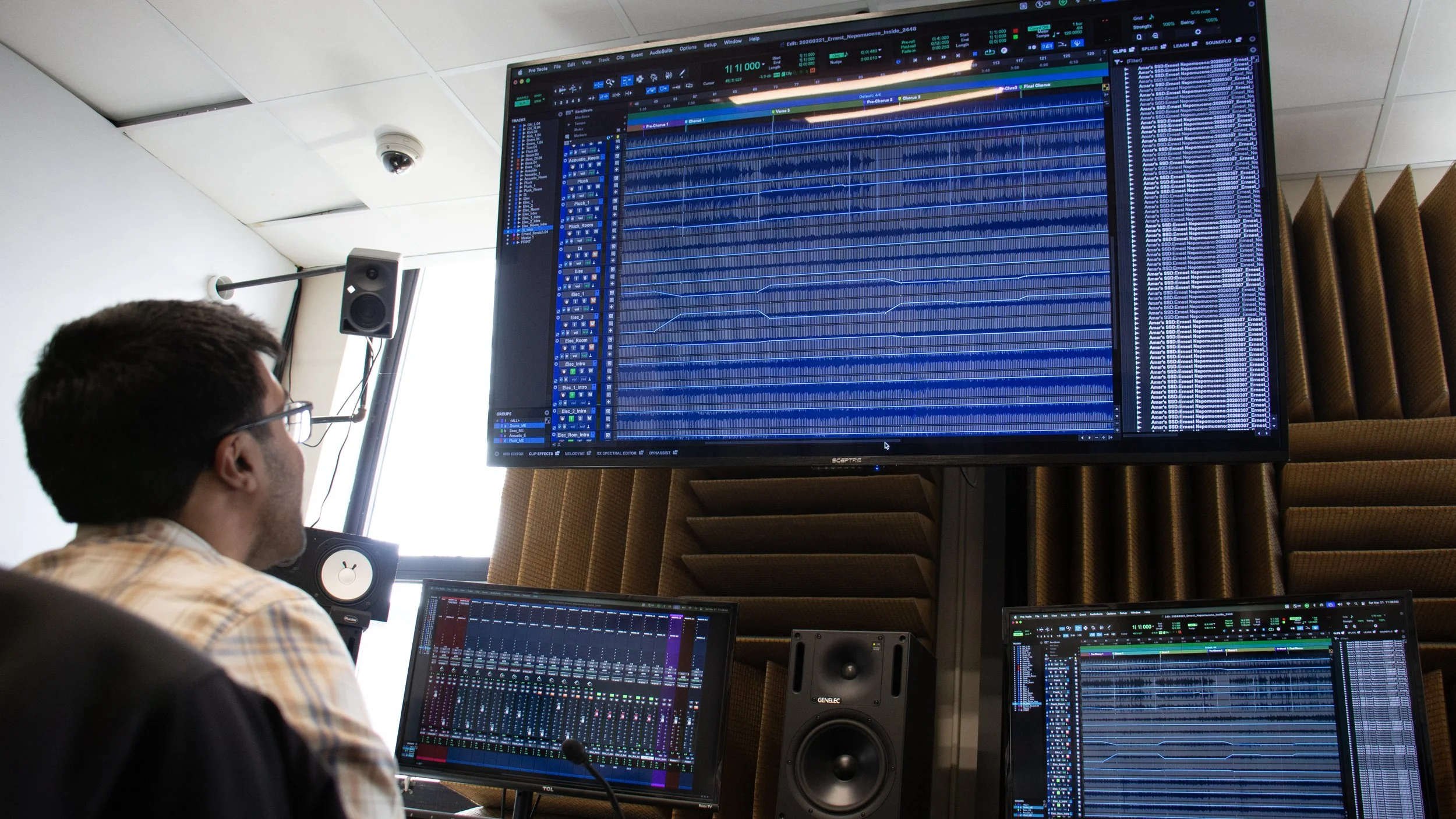
I then helped Bill out with mastering by listening back to the mixes and making notes on things I was hearing. I went back to adjust one of the mixes, which was kind of tricky to do since there was already a fair amount of processing on the tracks and the master. Bill then took the mixes and used some EQ, mastering plugins, and limiting to finish up the mastering.

Our program at school didn’t go very in depth into how the mastering process works, so it’s interesting to watch how Bill does it. The mastering we did for these mixes was pretty quick though since the primary goal was just to get a pretty decent sound for the songs so the a capella group could listen to them.

One thing I was wondering about was how limiting could affect a mix. I like to use volume automation to create bits of dynamic contrast in my mix, but I imagine limiting could potentially make those changes less noticeable. Some genres of music use limiting as part of their sound though. Limiting is something I'll have to try and add to my toolbox.

This week I also got to see Bill track jazz vocals. Another engineer created a session with the bounced mixes of different songs for us to do overdubs to. It was interesting to see how things like headphone volume, singing technique with the microphone, and the band’s performance affected how the vocalist performed. One of the trickier songs to overdub had an intro with only guitar accompaniment played with rubato, which made it more of a challenge to follow along with.

There was another session afterwards to select takes for each of the songs. The vocalist was kind of tough on herself when reviewing the takes, but I understand that she'd want to create the best performance possible. The vocalist did a great job though and showed a wide range of skill.

I think that covers a good chunk of what I did this week. I’m not sure what work I’ll be getting up to next week at the studio, but once I’m all done with my internship requirements, I think I might go back to working on some of the other projects I have. I’ve been doing a bit of video editing recently and have started to learn how to rotoscope. It's been taking me a while to finish but I think I’ll be able to create a silly visual effect with it.

William Ahearn
Intern Amar Singh - Week 3

It’s been another pretty eventful week at Tapeworks. I got to help out with some more recording, mixing, and got to end the week watching how Bill masters a CD album. I think I’m also starting to get a better handle on the routing and signal flow in his studio.

The a capella song that I’ve been working on is finally starting to sound closer to finished. I wrapped up my Melodyne tuning for the sopranos, altos, tenors, and basses. I then went on to do another pass to fix some of the rhythm. The song is in 6/8, so I was making sure to listen closely to the eighth note with a click to hear how the singers sat in that triplet kind of groove.

I probably could’ve tried to do tuning and rhythm at the same time, but I tend to default to doing one type of task and getting it done before moving on to the next thing. I’ll probably be able to do both as I get more comfortable with my Melodyne workflow.

Once that was all finished, I added back in the lead vocal to hear how it fitted in with everyone else and made some adjustments. I used a bit more “vibes” rather than the grid and visuals Melodyne was showing me to adjust the lead’s tuning. The performance had a lot of expressiveness from things like vibrato, pitch bends, and riffs, so I wanted to make sure I retained that while I was going in nudging pitches that were a little out of tune.

As I began to start the mix, Melodyne was giving me a bit of trouble. Some of the changes I made might’ve not properly saved, so I had to go back and redo some of my work. I made sure to render my tracks afterwards so I wouldn’t lose my changes again-

Doing the mix was pretty simple in some ways and tricky in others. Getting balances of each part wasn’t too bad. I was just trying to make sure each voice could be clearly heard. The tricky part though was making sure voices didn’t stick out too much. Some takes were just a little louder than others which made some voices stick out for parts of the song. The quality of the voices, like their breathiness, was also pretty varied, so I was trying to figure out how I could pair voices together and pan them out to compliment each other.

I was also struggling a bit to figure out what kind of processing to do on the vocals, especially the lead. For me, mixing vocals feels kind of open ended. There’s a lot of different ways to go about it and get a good result, so I end up getting kind of stuck on what to do. I ended up just using stock plugins to do some eq, compression, and de-essing on the lead. I also used a long 5 second hall reverb for the whole group. I’ll have to be careful that it doesn’t make the mix too muddy, but I think having the singers in that kind of large space sounds pretty cool for the song.

I’ll probably end up handing over the mix to Bill at some point to have him finish it up. It was pretty helpful going onto the Tapeworks website to listen to the other a capella mixes Bill has done to get an idea of what kind of sound to shoot for.

I spent the rest of the week mainly helping out and watching Bill work on recordings and mixes.

I got to see my first ADR session. Well, it wasn’t exactly ADR since what was being recorded wasn’t being synced to an actor’s mouth movements on screen. The video was more like a guide for the narration being recorded, and helped give the talent an idea of how to perform the lines from the script. It was a cool session to watch. I got to see how Bill tracked takes and quickly edited them to the video so the people involved could see how the scene played out. It was also interesting to see how everyone interacted with each other over Zoom to try and convey the ideas they had about the lines and how they were to be performed.

There’s going to be a voice over session this weekend that’ll be helping out with. I helped Bill set up for it during the week, and I feel like I have a pretty good idea of how things are routed for the most part. I was able to explain back the signal flow from the mic to the DAW and the other stuff in between with some explanations from Bill when I got confused by something. I got to learn a bit about Source Connect as well which I haven’t used before. From what I understand, it lets people work together remotely to send high quality audio to one another and some other stuff.

The mixing I got to watch Bill do this week was interesting. He was going through multiple revisions of one mix based on what the artists were requesting. We had another client who had multitracks of some songs he recorded as well. Bill was able to balance mixing the song with his ideas and tastes while also letting the client have control to take the mix in the direction they’d like it.

The last thing I did this week with Bill was watch how he did his mastering. There was a client who came in with mixes of choir songs. I got to see how the songs got ordered the way they were going to be for the CD album. Then he went on to treat the mixes with a bit of EQ and reverb. Some of the recordings were done live with an audience, so attention was taken to fixing noises and making sure the beginnings and endings of the song were clean. It feels like a task that takes a fair bit of concentration and focus to do, but we were also chatting about different things over the few hours we were going through the songs-

So that about covers it for this week. There’s still more work to be done! I give a tired hooray to that… but it should be fun and interesting to help out with.

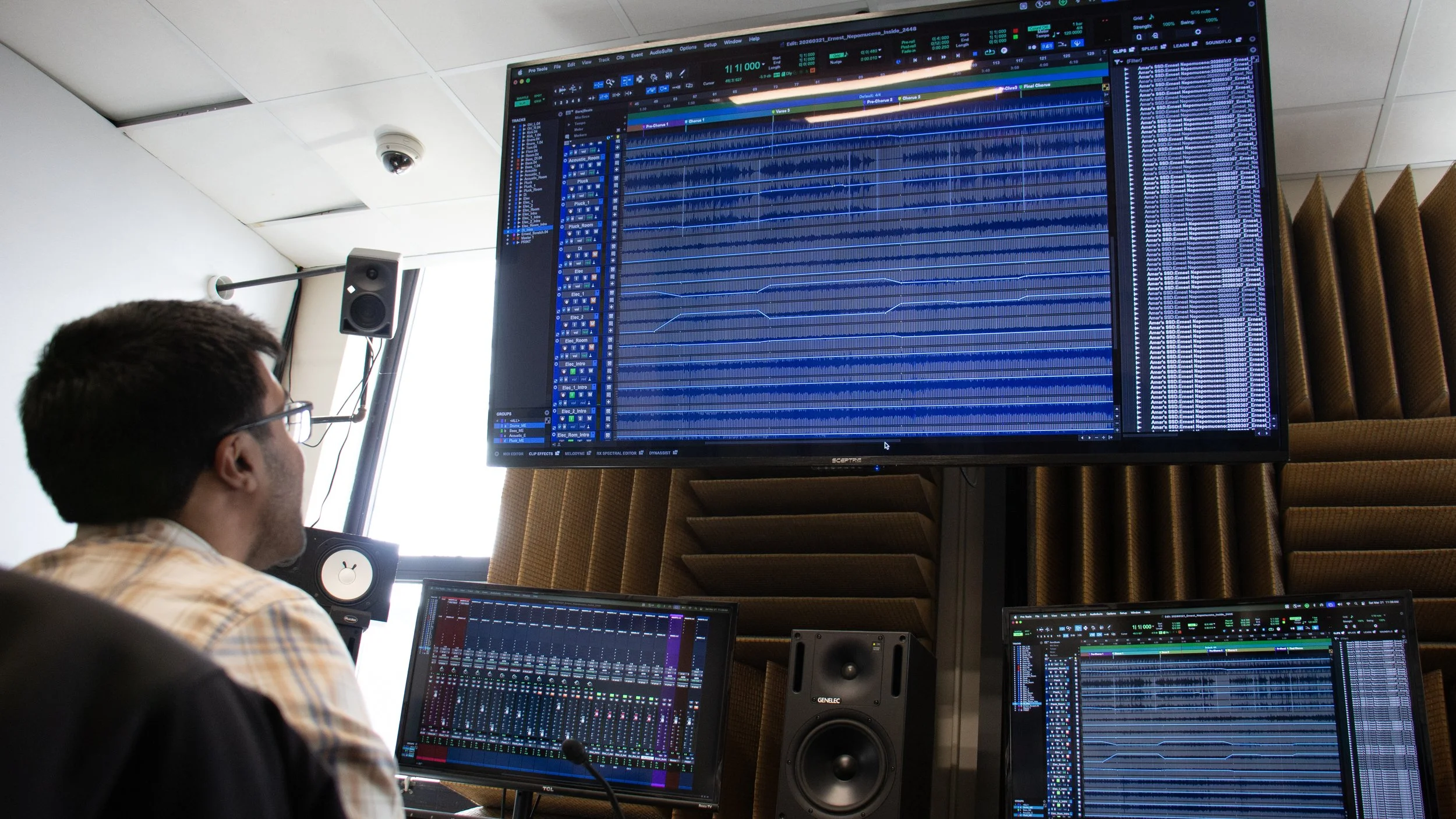
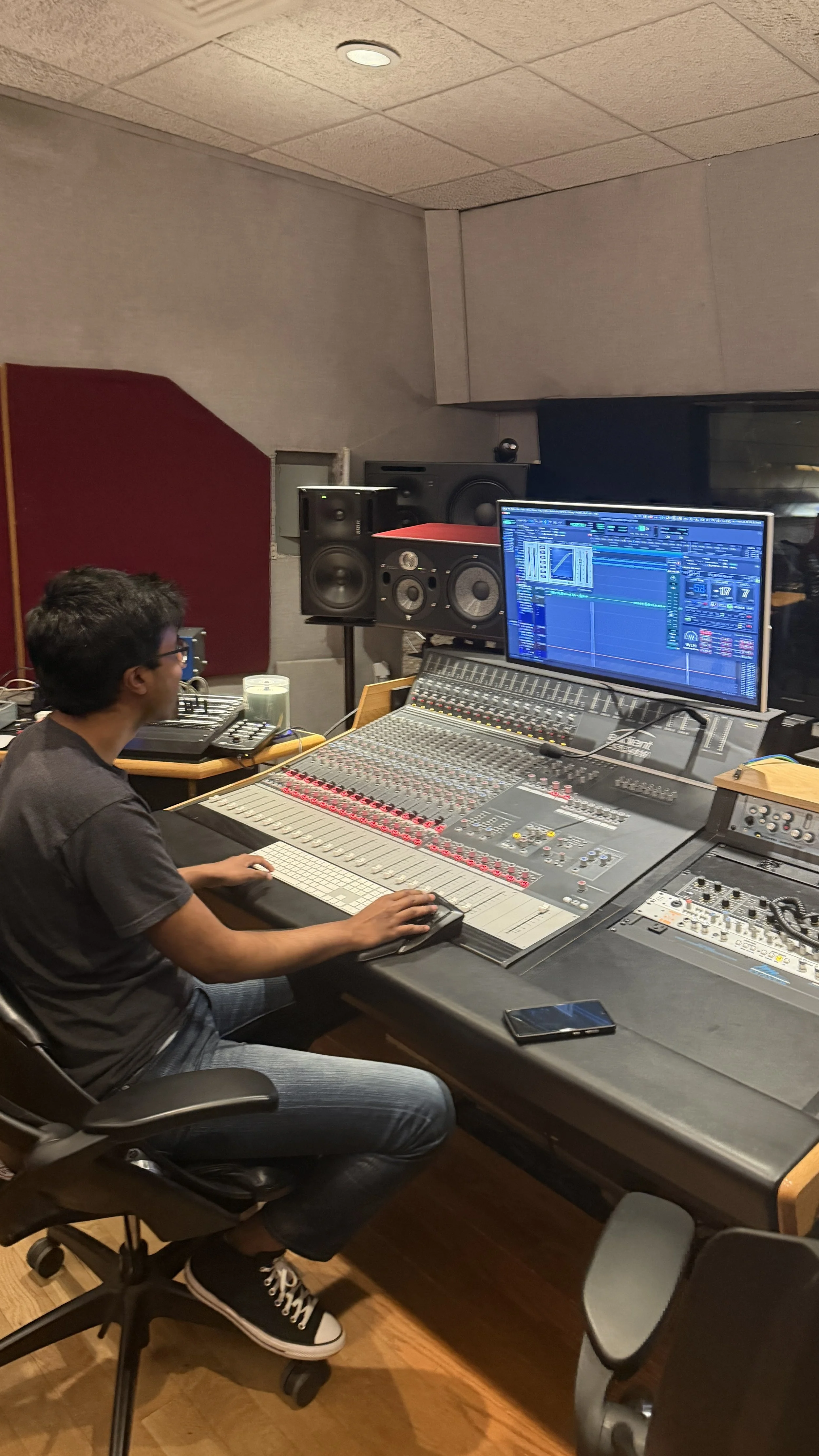
I realize I haven’t actually shown a picture of myself doing any work in the studio. I guess I haven’t thought to take out my phone to snap a selfie of myself at the console or in the live room. I’ll show a picture of me doing some mixing for my capstone project at UHart for now- Credit to my friend Nate who took the photo and did a lot of additional video and picture work for my capstone. Hopefully we’ll have a cool documentary chronicling that experience at some point soon.

William Ahearn
Intern Amar Singh - Week 2

As I begin to write this, I'm trying to figure out what the lesson I learned from this week was. Not that something life changing or horrible happened at the studio- but I guess the work I got to do and watch made me think a little about the purpose of what I was doing. Maybe I've been having a bit of an introspective and moody week… so let's just jump right into it!

A few of the clients that came into the studio this week asked me what my plans were for work in the future. I'm kind of bad at answering those kinds of questions. There’s a lot to say in such a short window for a response, so I try to give a summary of my aspirations as best I can, or just say “I don’t know” when I really don’t know what my plans are.

I'm hoping to maybe one day help make music and work on audio for video games. I think I’d also like to be able to do that for other forms of media like movies or television. That's kind of broad, but I’m hoping it might help me to stay open to more job opportunities while still getting to do something I'm interested in.

I think what drove me to study music, programming, audio, and try to make a career out of it came in large part from the intersection of the different things I like in life. I often listen to the soundtracks of video games or shows to see what I might’ve missed, or re-experience moments and feelings from them. I also enjoy getting to create things like videos and songs for myself, and to share with others. Being able to create and solve problems during the creative process is kind of satisfying to me. It's also frustrating when it doesn't work out well. Those are all things I think I'd like to be able to carry with me into my career though.

The work I get to do at the studio uses some of the same skills I use for my passions, but it requires a different kind of attitude and mindset to get the work done.

This week I mainly worked on tuning vocals using Melodyne. Bill recorded an a capella group and gave me one of their songs to work on. My first step was to clean up the vocal performance and fix some of the tuning. The bass parts were already done for me by someone else which was nice. Gives me a little less work to do.

I’ve seen people use Melodyne before, but this was my first time sitting down to actually use it. I can’t really speak to how Melodyne works on a technical level, but what I can say is it's a powerful tool that can do a lot with tuning and more. Individual notes of chords can be tuned, timing of notes can be changed, and the way a pitch sounds–like its vibrato–can be adjusted.

I started by working on the altos and adjusting their tuning by hand. I was clicking and dragging individual notes to their pitches. I tried to use a combination of what Melodyne was saying was in tune along with my ear to make my decisions. That took me a little more than a full day maybe to get through, and that was just for the altos- I still needed to get through the tenors and sopranos.

Bill didn’t really have an issue with that though since I was still figuring out Melodyne and what the process was like. He showed me some features to speed up my workflow like how notes can be automatically adjusted to pitches. I just had to be careful that the notes got adjusted to the right pitches.

I went on to tune the tenors, trying to work through the parts more quickly with the new technique I learned. I still went in to fine tune notes by hand and worked section by section, relistening to things to make sure they were sounding right. I was able to get a little more done in a shorter amount of time, but it still wasn’t enough to get all the parts including the sopranos tuned.

Bill then recognized I was probably giving the vocal parts much more fine tuning than the project required. He explained to me that there were different levels of tuning, and in general, effort, that could be given to a project depending on how much time and resources could be spent on it. In some cases, autotune might be enough to get the kind of tuning you need. I was doing decent work, but it was more than what was necessary for this project.

The issue that started to creep up in my mind though was how speedily using Melodyne might remove some of the artistry from the process of making music. I wanted to use more of my own judgement to fix the tuning and performance of the vocals. If Melodyne could just do a grand majority of the work for me without needing a whole lot of input from myself, then would that make what I was doing kind of mindless and without meaningful intention? Would that remove some sort of value from the musicianship and artistry of myself and the performers?

Maybe.

There’s also different levels of humanization you can apply to a performance after you make your changes with Melodyne, so that adds another level of junk to what I'm talking about here.

But now, I think about the rest of the work I got to see Bill do this week. There was lots of mixing and podcasting going on. There was a really fast paced Warner Bros. voice over session. That one kind of stunned me just from the pace they were going at recording lines and how quick they wrapped up when they were all done. There's lots to be done with varying levels of time, energy and resources that can be committed to each. Despite that, Bill would still manage to get results that pleased clients, showing care for the art of it.

I guess the lesson I learned this week was that the amount of resources that can be given to a project varies, but the artistry doesn’t have to disappear. Some projects can get a lot of time and meticulous care given to them. Other projects have to get quickly rolled out the door the same day. Though no matter the project and what tools are being used, there'll probably be at least some room for artistry. I think as I figure out how this industry works and churns, I'll also be figuring out how to balance artistry with efficiency. The passion of doing things I like with getting stuff done.

I think I’ll wrap up my recap of this week there. Maybe I’ll get a mix finished for the a capella song next week.

Now that we're at the end of the blog, I’m just gonna try and shoehorn in another fact from my life. I recently finished playing the game “1000xRESIST” developed by sunset visitor. Very interesting characters, plot, and storytelling. If a narrative game about a clone society, space alien disease, generational trauma, and more, sounds interesting to you, I recommend you check it out.

William Ahearn
Intern Amar Singh - Week 1

Summer Intern Series 2023

Hello there! My name’s Amar, and this is the start of my intern blog. I’ll be writing about what work I get up to at Tapeworks and some of the other stories I have to share during my internship here. I haven’t written blog posts before, so we’ll see how this ends up going. I’ll try to make my writing compelling and maybe a little funny-

I recently graduated from UHart majoring in Music Production and Technology with a minor in computer science. I technically don’t have my degree yet though. My last requirement I have to complete is an internship at a recording studio. I reached out to a good handful of studios in the Hartford area and Bill responded back to me, offering to teach me and give me some work to do.

This week I got to help out with a good variety of things around the studio. I started off by helping Bill with recording two podcasts.

We did a fair bit of rearranging to set up the live room for podcasting since we were expecting a larger group. I got to see how Bill thought out the set up, making sure that the audio, video, lighting, and set were all good to go. Plants with a little glow underneath them is a pretty snazzy look.

Bill was able to switch camera angles while the group was recording to get an edit that was already close to being finished. After a little more mixing, he handed it off to me to clean up the video and audio. Cleaning up audio in a podcast reminded me a lot of editing tom fills. Oftentimes there’d only be one person talking, so I would go through and selectively mute the other people’s mics so there’d be less room sound and comb filtering.

Bill had another podcast to record that was hybrid with one person in the studio and another on Zoom. It’s cool to see how many different services Bill is able to offer. It requires a lot of understanding of different technologies and how they’re able to work together.

Later in the week, I spent some time mixing a student band’s cover of “Feelin’ Good”. It usually takes me a while longer than a day to get a mix done, so it was a good challenge for myself to see how close I could get to a finished mix in a limited amount of time. It was a little stressful to start off and I was making a few mistakes- but after a certain point I got into the groove of working on the song. Bill enjoyed what I was doing with mix and worked on it for a short while after to get it over the finish line.

I got to finish off the week seeing how Bill ran a session to record a client’s piano compositions. It was a pretty quick and minimal setup. The bulk of the session was working with the client to get the takes we needed. I shadowed Bill and helped keep track of takes and noted spots that would have to be fixed. I got to see how Bill makes his edits and how he’s able to quickly understand what section of the song he’s in, even if he doesn’t have sheet music. I was also reminded how it’s important to have good soft skills–like understanding the artist’s needs–to balance with the technical know-how so the client has a good experience during their recording session.

So that about does it for my recap of this week. There’s gonna be lots more that I learn and do over the course of this internship. Maybe my next steps will be getting a better handle at the signal flow and gear that Bill has in the studio. I’ve got an okay idea of how things are set up in there, but there’s definitely some complex stuff going on.

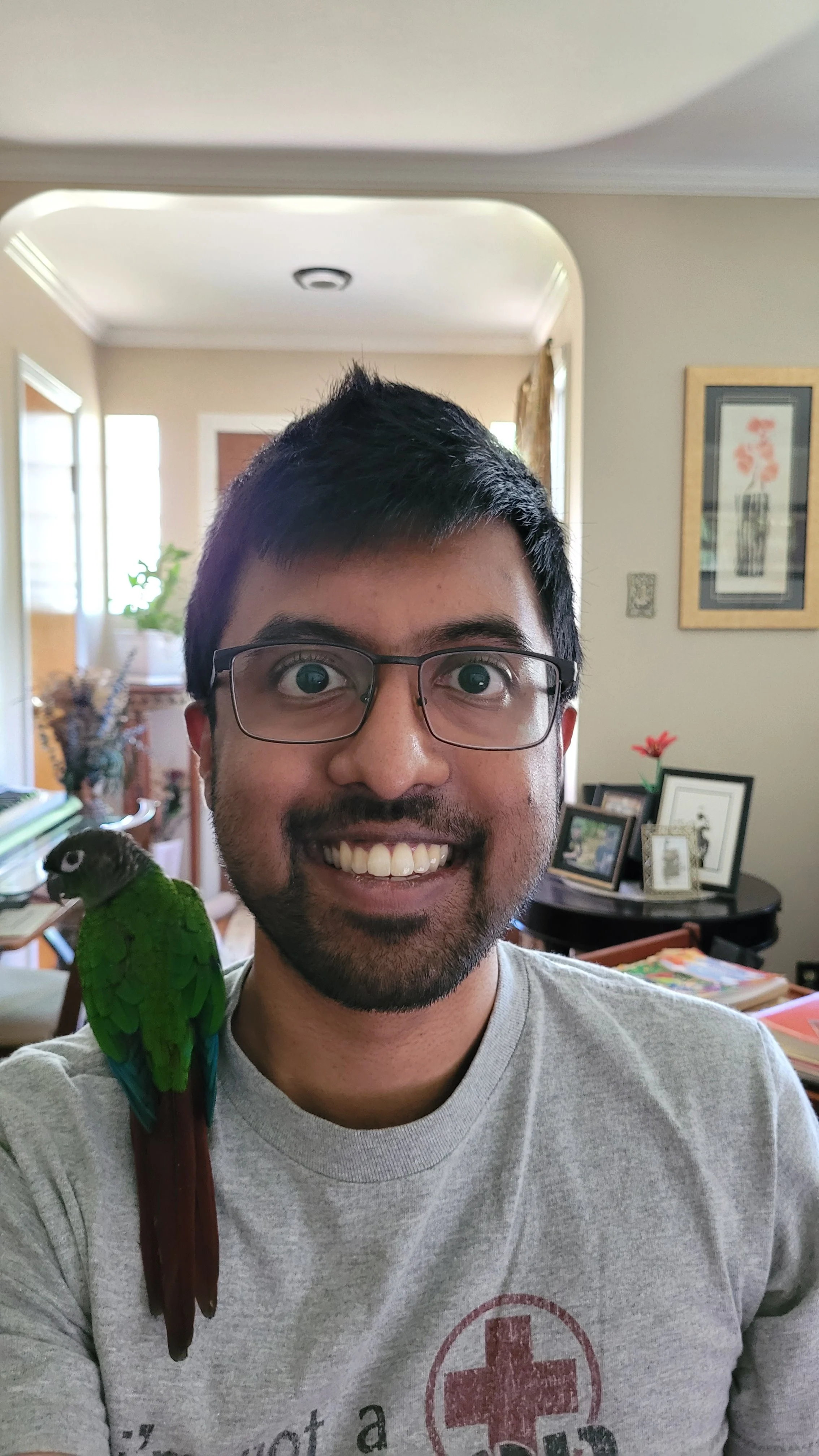
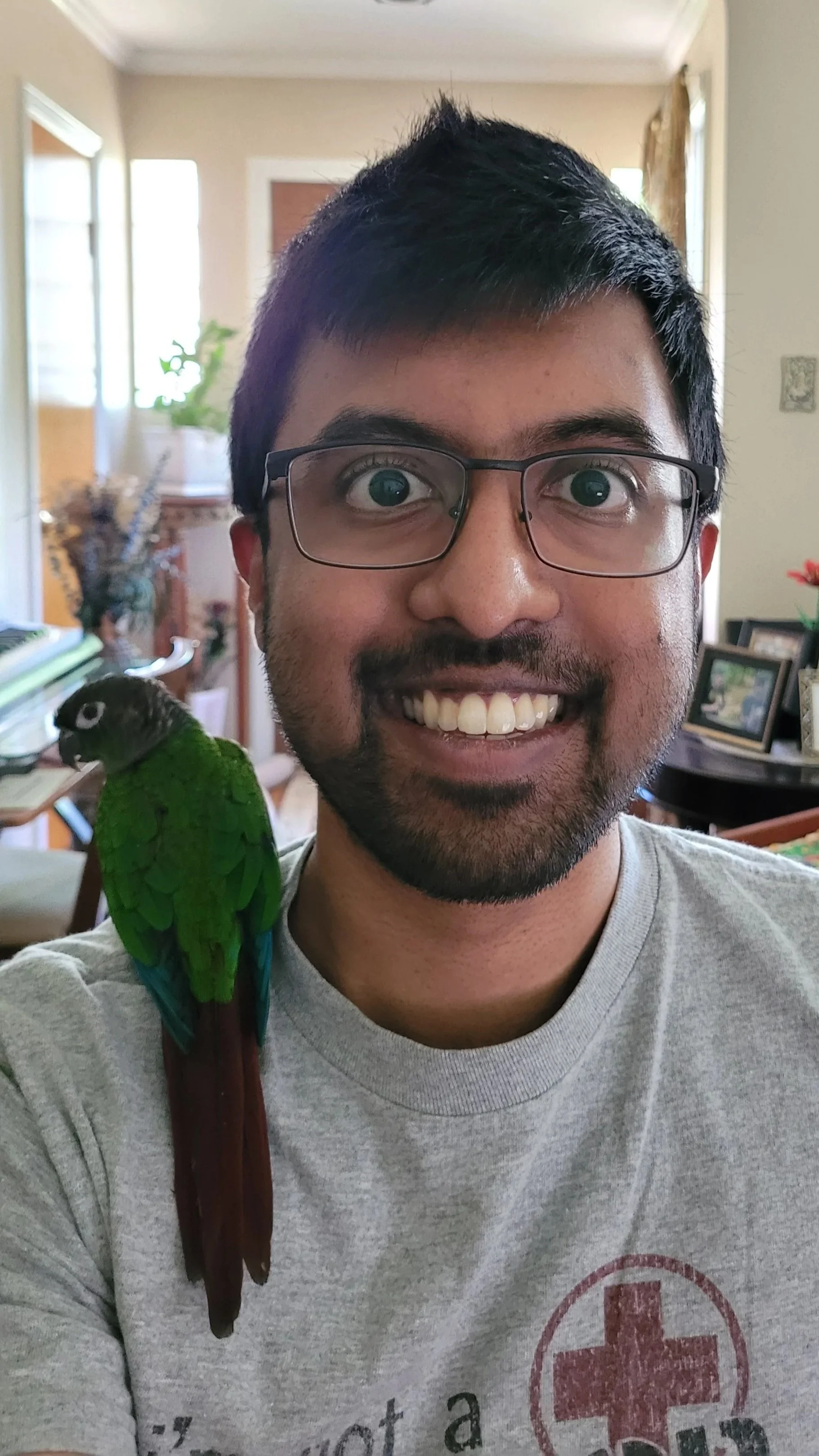
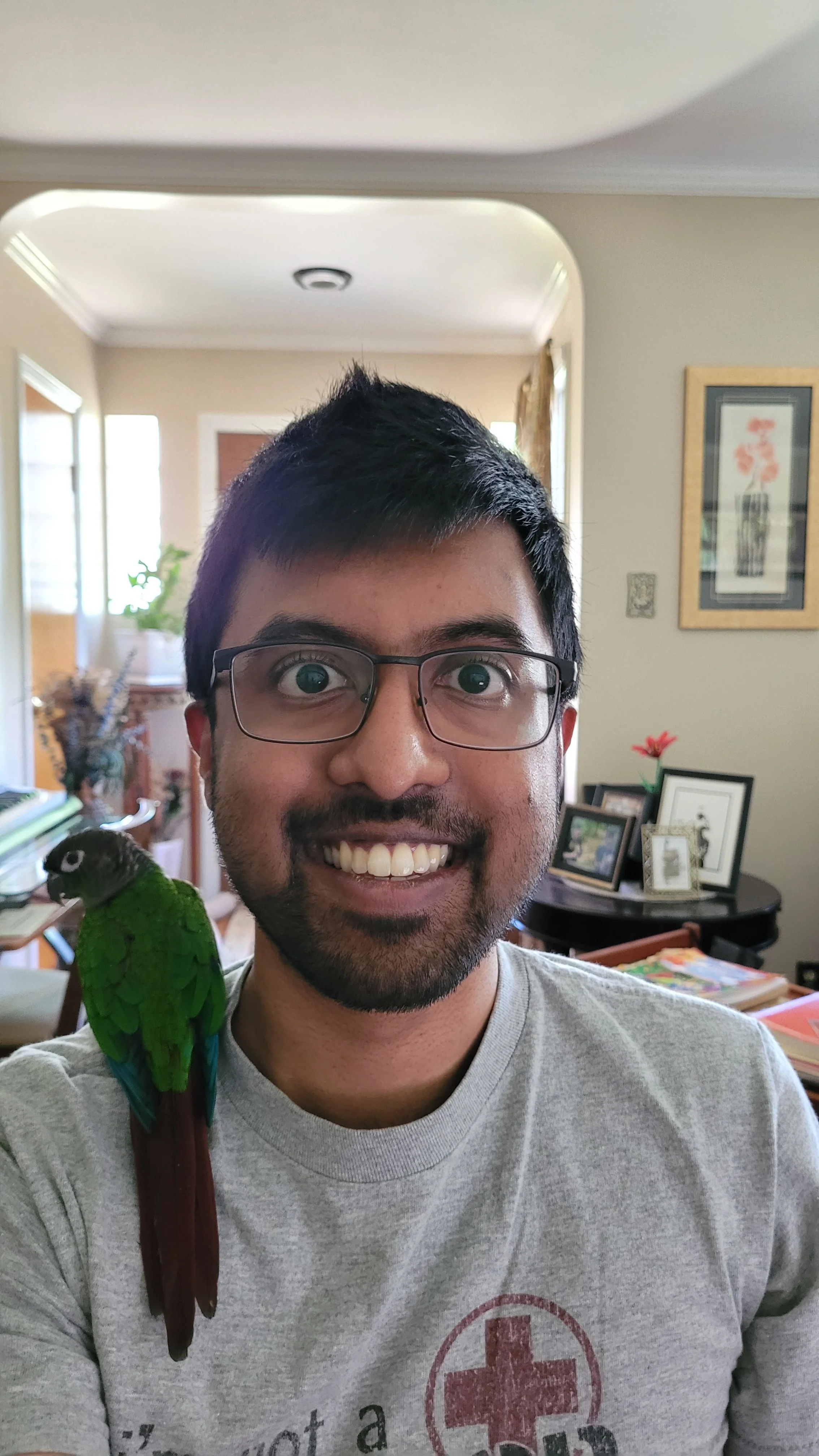
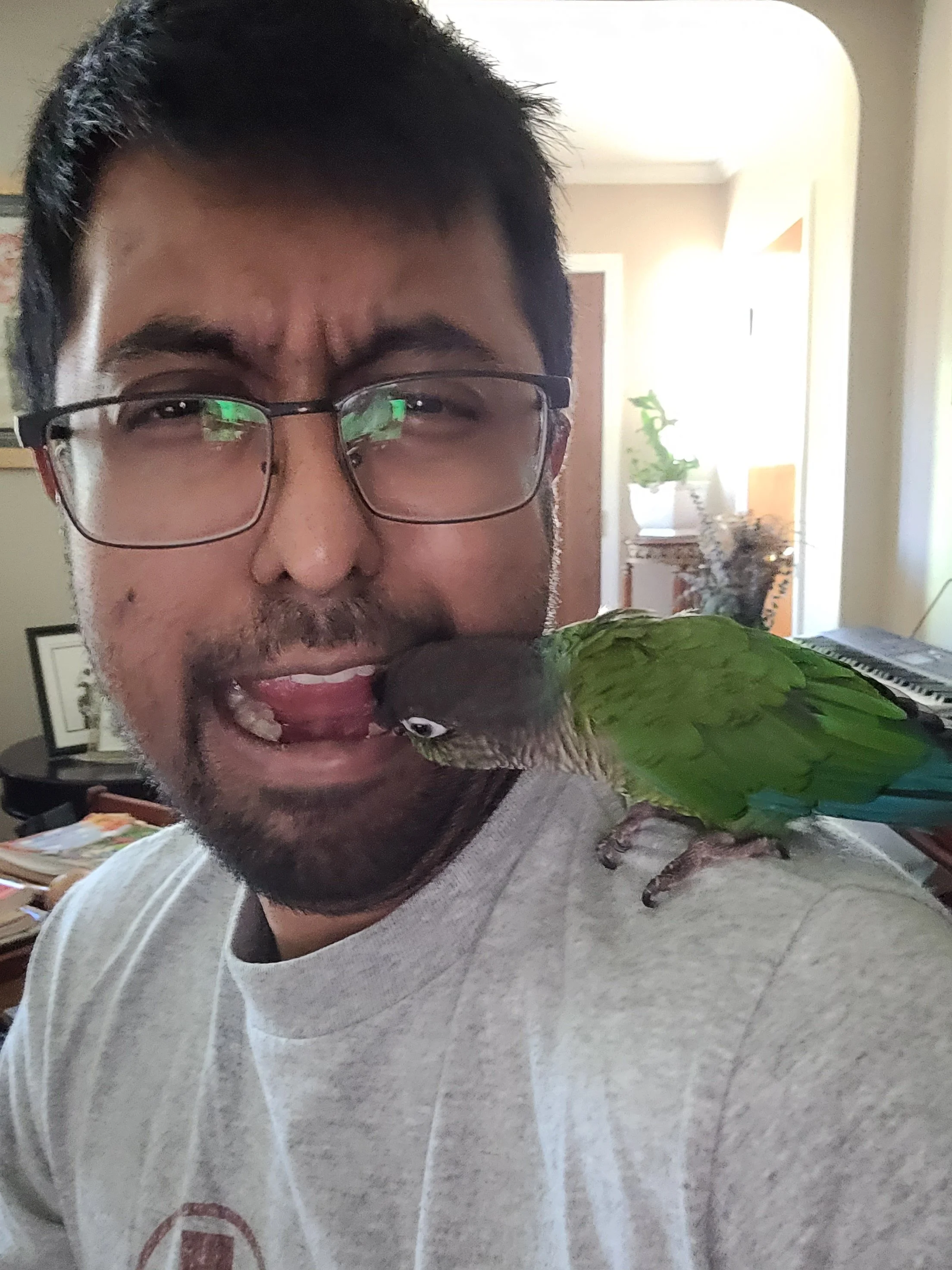
I’ll leave off with a little factoid about myself. I’ve got a cute pet bird named Ginger. He’s a rascal and meanie sometimes, but we still love him!

Intern Baker Wainscoat - Week 1
 

Summer Intern Series 2023

Hello! I’m Baker Wainscoat. I’m a new intern at Maple Avenu’s Tapeworks Recording Studio. I’m starting this blog series to keep track and share what my week was like with whoever would like to read it!

My first entry may be brief as I had a bunch of stuff happen to me outside of Tapeworks, but the times that I was in the studio were some of my favorite moments of the week. I began interning for Tapeworks on Tuesday, June 6th. My first day consisted of a tour of the studio and everything it has to offer. It was on this day I also met my co-intern Jade, who coincidentally is from the same town I live in, so we got a kick out of that connection.

Bill gave us a rundown of our responsibilities as interns, so I took notes on specific dated information and took a packeted list of our duties for keeping.

Bill took us around every part of the studio and explained what happens in each room. I have to say I honestly love studio A, the main control room which Bill tracks out of. He’s recently upgraded his monitors in the studio to Focal Trios, which happen to be my dream monitors. So you can imagine my excitement when I walked into the room. The studio is also comfortably lit with possibly one of the comfiest couches I have sat on in recent memory. When Bill was showing me and Jade some projects he was working on, we both sat down on the couch and I just slowly started sinking into it… super comfy!

Later that day Bill recorded an audition for a TV commercial for Lego. It was really interesting to see how he directed the vocalist to change their inflections/delivery of the lines they were given to say. As soon as they started speaking, it was like they were already in the commercial. I hope they get the spot.

The rest of the day consisted of briefly taking out some boxes and editing some acapella groups' recorded tracks. While the work may be repetitive, I learned a ton from Melodyne that I didn't before, and it’s helped me so much in my own personal projects. I left around 4:00 pm on a fairly empty stomach because I totally forgot that I have to pack a lunch now. Jade got my back though, as she offered me some baked bagel bites which we actually delicious.

On Wednesday, I drove back at around 9:40 am, this time with lunch, and saw that there was a podcast session about to begin in the podcast studio. The podcast room is unique, as clients can use our equipment to record, or they have the option to record everything themselves and leave with their project that day. While I come from an experienced background in music production, podcasting is something I want to learn more about and develop those skills further.

While that was happening, Bill showed me the signal flow of the Aduient ASP 4816 console in A. Bill explained everything in a very digestible manner so I was glad I was able to see how things worked in the control room. Once I start hopping on big sessions, I’ll be able to see the workflow in action. After this, we transferred a hardware unit from studio A to B, and then I continued working on vocal editing from the previous day.

Now, from Thursday to Friday, I was out of the studio because my wisdom teeth were scheduled to be removed. Fortunately, I’m recovering fast, so I imagine to be back in the studio next week. I’m looking forward to getting back!

 
Intern Jade Schoenfeld - Week 1
 

Summer Intern Series 2023

Intern Jade Schoenfeld

Friday, June 9th 2023

My name is Jade Iris Schoenfeld and I am a rising junior at Wagner College studying Vocal Performance. I am so excited to be working with the Tapeworks family and look forward to learning more about this industry.

This week I had the opportunity to watch Bill mix and master a variety of songs. As a member of an acapella group at school, I was fascinated by the work done with two different acapella ensemble pieces. I have always wanted to record acapella arrangements, and now have an idea how the editing process looks like for these types of recordings. I also watched Bill add finishing touches to a Jazz song, send out commercial audition audios, mix an original song, and edit multiple podcasts.

After being at Tapeworks for only one week, it is clearly evident to see how much of a “hands on” learning experience this internship will be. I have aided in the set up of a few types of recording sessions. Each setup is varied based on the type of recordings being done.

Whether it is for a podcast or commercial audition, it is important that the room maximizes the quality of the audio recording in correlation to the microphone being used. The most complicated set up this week was for an ADR session that was done for a pilot episode. We had to set up moving boards, a TV, two microphones, a stand, and a camera. Once that was completed, we then had to connect all the technology not just to the recording booth, but also to a zoom meeting that would take place simultaneously. In addition, I have started to learn the mixing process for a podcast and have worked on two so far.

I am excited for next week and can't wait for what is to come!

 
Introducing the 2023 Interns.
 

Tapeworks welcomes Jade Shoenfeld and Baker Wainscoat to the Tapeworks Family.

Each year we receive numerous requests for our coveted summer internship spots here at the Tapeworks studio. We are excited to see what they bring to the table and to watch them learn and grow. Follow their adventures via The Intern Blog.

Jade Iris Schoenfeld is a rising junior at Wagner College studying Vocal Performance.

I am so excited to be working with the Tapeworks family and look forward to learning more about this industry.

Follow Jade’s experience on The Intern Blog.

Baker Wainscoat is a recent graduate from The Hartt School, studying Music, Production and Technology.

I am looking forward to putting my education to use in a real world environment.

Follow Baker’s experience on The Intern Blog.